.png)




Key takeaways:
- Answering the question, “How much does TRT cost?” is tricky because many factors influence the price you pay, including the required lab tests, TRT delivery method, your insurance, and more.
- The cost of testosterone therapy alone (minus any associated costs) usually ranges between $20 a month to upwards of $500 a month.
- Continue reading to learn what factors influence the price you pay, when insurance does (and doesn’t) cover TRT, and how to find an affordable TRT option.
Conversational Takeaway: Even if you’re a personal finance pro, predicting healthcare costs is tricky. While we can’t determine every healthcare cost out there in one article, this guide does cover testosterone replacement therapy costs.
FDA-approved testosterone replacement therapy (TRT) for men is a commonly prescribed treatment for low testosterone. Per the National Library of Medicine, it can help reduce symptoms of low testosterone, such as a decrease in muscle or mood imbalances, and it has improved the quality of life for many people. But just how much does TRT cost?
The price of TRT varies more than you may expect. And yes, this is a frustrating answer that doesn’t fit nicely into a budgeting spreadsheet. The good news is that if you take the time to explore all TRT options, you typically can find a TRT type and pharmacy option that suits your budget and health needs.
“The goal shouldn't be finding the cheapest testosterone available,” says Farrah Christian, FNP-C, a board-certified nurse practitioner who helps patients navigate hormonal therapies. “The goal should be finding safe, evidence-based care that helps patients achieve the best possible outcome while understanding the full financial picture from the beginning.”
How much does TRT cost per month?
TRT prices range from $20-$500 a month, depending on the form, if it's brand name or generic, and whether your insurance covers treatment. And when you compare prices, remember it’s not an exact apples-to-apples comparison. Treatment length and dose vary by delivery method, meaning even if the monthly cost is higher for one, it could have a lower overall cost depending on the prescribed dose and duration.
Testosterone injections
Testosterone injections are a form of TRT where someone injects the medication subcutaneously or intramuscularly. TRT injections have been around for almost eight decades, and as the tried-and-true option, they are typically the least expensive, says Christian. They also win the superlative “most likely to be covered by insurance.”
Part of the reason this version is affordable is that testosterone cypionate, the most common generic form of testosterone, is an injection. Other name-brand injectables are likely to be more expensive.
Even still, you’ll notice a huge price difference when researching how much do monthly testosterone injections cost. The list price (aka the cost before insurance or any discounts are applied) for Aveed, a name-brand injectable, is $2,233.43 for 3 milliliters. Generic options are often cheaper, with prices as low as $29 a month for that same amount.
Testosterone gels
If injections make you squirm, meet testosterone gels. According to the National Library of Medicine, these gels are applied to the skin in the morning, usually after a shower or bath. They are convenient but significantly more expensive than injections. The name-brand AndroGel has a typical list price around $600-$630 a bottle, while generic gels may cost as little as $50-$134 a bottle.
Testosterone gels are often covered by insurance, though Christian warns that coverage may come with a higher copay or coinsurance (aka your out-of-pocket cost).
Testosterone patches
Testosterone patches are applied daily to the skin, arm, or back to deliver testosterone into the skin and, subsequently, the bloodstream. While these used to be available, they’re no longer available in the US, per the National Library of Medicine. They may be available in other countries, but are not covered by U.S. insurance plans.
Testosterone pellets
Pellets, tiny implants inserted into the skin, provide a longer, sustained release of testosterone and are often used for people going through perimenopause or postmenopause, per a 2025 Cureus review.
Testopel is the only FDA-approved testosterone pellet product. It’s a name-brand option with a list price of $1,000 to $1,200 a month—and that’s without the procedure fees.
And yes, this is higher than other options, but people usually take less frequent doses, which may help lower costs.
Oral testosterone
If you read through those options and thought, “Can’t I just take a pill?” then I have good news: testosterone is available via an oral capsule. Testosterone pills are newer, with no generic options available. That means there are fewer drug manufacturers and prices that can easily run around $800-$1,000 a month, though some insurance plans cover them.
Some brands are even more expensive. The list price for Jatenzo, a name-brand testosterone pill, ranges from $1,100 to $2,200, depending on the dose.
What affects the cost of TRT?
“Social media ads make it seem like obtaining testosterone is a simple transaction similar to ordering groceries on instacart,” says Christian, “It is actually a very technical medical treatment, and a one-size-fits all approach does not tend to work well.” That means prices will vary from person to person too.
Factors that may affect the total price include:
- Insurance tier placement: Many insurance plans tier drugs, with drugs in tier two or three having higher copays. For many providers, testosterone medications land in those pricier tiers.
- Generic vs brand-name: Generic drugs have the same active ingredient as name-brand options but usually come with a lower cost.
- Use: The reason someone requires TRT impacts the cost. If TRT is prescribed for a reason approved by an insurance provider, for example, insurance is more likely to cover some of the cost than if it’s prescribed for off-label use.
- Other costs: We’ll get into this more later, but the TRT itself isn’t the only cost. There will likely also be bills for doctor’s appointments, lab tests, and more.
Does insurance cover TRT?
Most commercial insurance plans cover testosterone when it’s prescribed for diagnosed hypogonadism in men. The National Library of Medicine defines hypogonadism as when the body’s sex glands produce little or no hormones.
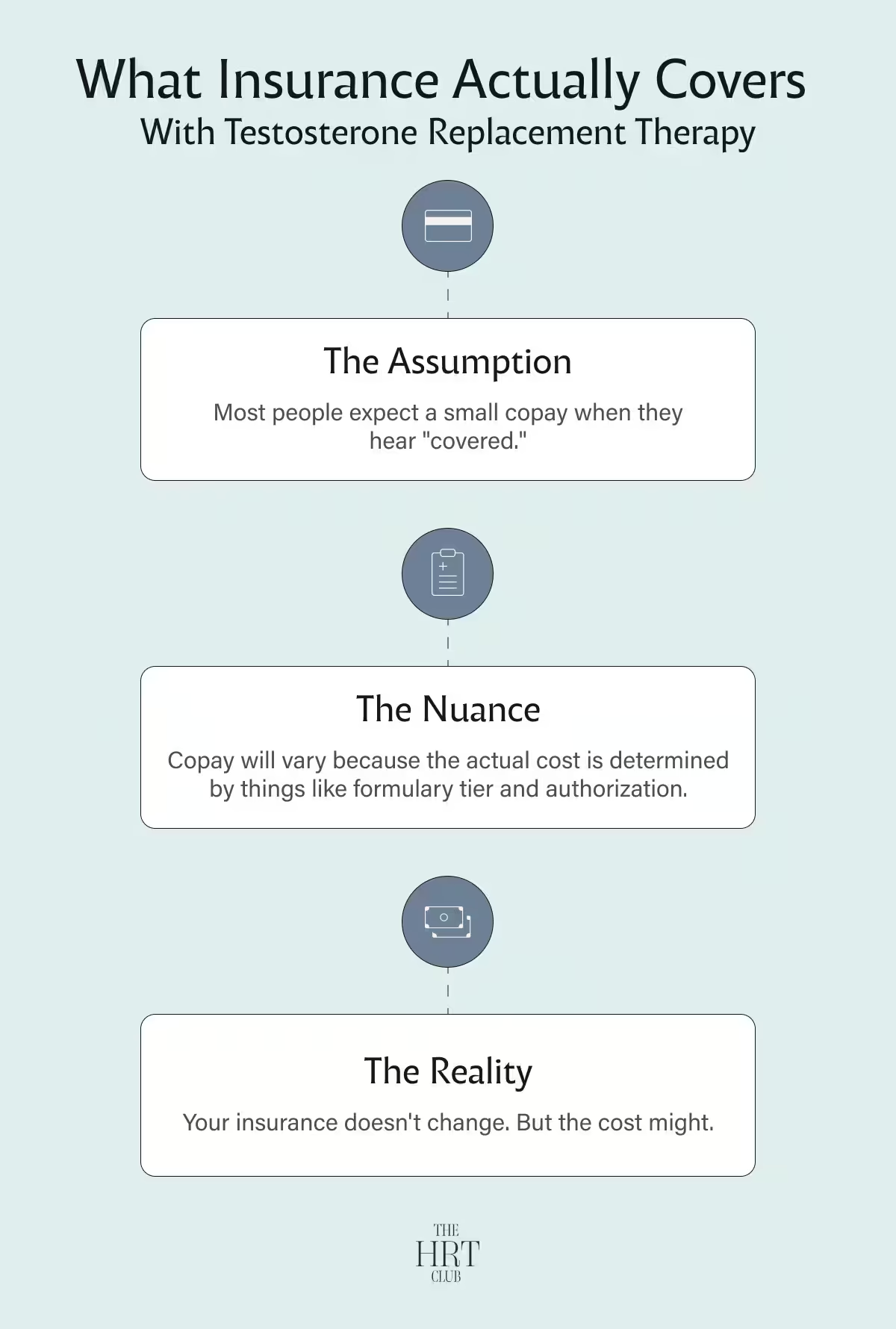
Covered, however, doesn’t always mean affordable. When insurance covers TRT, you’re still responsible for a copay or coinsurance. For folks who aren’t insurance experts, here’s a quick recap on copay vs coinsurance:
- Copay: A set amount someone typically pays for a drug, healthcare service, lab test, or hospital stay. If, for example, an insurance provider lists a $10 copay for all tier one drugs, someone would pay $10 for a monthly prescription, regardless of the drug price.
- Coinsurance: A percentage a beneficiary must pay for a drug, healthcare service, hospital stay, or lab test. If, for example, an insurance provider had a 20% coinsurance for tier one drugs, someone would pay $20 for a $100 drug, but $40 for a $200 prescription.
To make things even more complicated, all this varies from plan to plan. “My advice is to contact your insurance company before starting therapy,” says Christian, “Understanding these details upfront can prevent unexpected expenses later.”
Formulary tiers and copays
When an insurance plan covers prescription drugs, they categorize them into tiers. This hierarchical list is referred to as a formulary. The higher the tier, the more the out-of-pocket cost (either a copay or coinsurance) is for the beneficiary.
These tiers can vary, though Medicare (a federally funded health insurance program for people over 65 and others who qualify) provides an example of what these tiers might look like:
- Tier One: Lowest copay or coinsurance for generic testosterone medications may fall here.
- Tier Two: Medium copay or coinsurance for name-brand drugs that are “preferred” by the insurance provider.
- Tier Three: Higher copay or coinsurance for name-brand drugs that are “nonpreferred” by the insurance provider.
- Specialty Drugs: Because three tiers wasn’t enough, some drugs are classified as “special,” meaning they come with even higher copays or coinsurances.
Prior authorization requirements
“Many insurers require a prior authorization before they will cover the cost of testosterone replacement therapy,” says Christian. What exactly they require for prior authorization varies, though plans typically require lab tests showing low testosterone levels, a thorough medical evaluation, and a prescription from a qualified healthcare provider.
Testosterone coverage for women and gender-affirming care
Currently, testosterone therapy is only FDA-approved for men. That means women and other people requiring gender-affirming care would have to use testosterone “off-label.” The FDA defines off-label drugs as ones prescribed for a condition they are not approved for. The term doesn't mean they are unsafe or ineffective for the prescribed use, but it does mean insurance probably won’t cover the cost.
So, how much is TRT without insurance? That number can vary. The good news: Paying out of pocket is sometimes cheaper than what you'd owe with insurance (more on ways to save below).
Medicare and Medicaid coverage
Private insurance coverage varies a lot, but there are two insurance types with (slightly) more standardized policies: Medicare and Medicaid.
Medicare
- What is it: Federal health insurance program offering coverage for those over 65 and others who meet certain conditions
- TRT coverage: Medicare Part D plans cover TRT when it’s medically necessary for men with low testosterone. Part D is an optional component of Medicare that covers prescription drugs.
- Maximum price: In 2026, Part D out-of-pocket costs are capped at $2,100, meaning that’s the most someone will pay annually for all the necessary prescriptions, including TRT.
Medicaid
- What is it: State-run program for people who meet certain income requirements
- TRT coverage: Varies by state. In Mississippi, for example, Medicaid covers testosterone therapy when medically necessary for men, so long as the TRT type is on the state's preferred drug list. Meanwhile in California, Medicaid may cover TRT for men with low testosterone and as part of gender-affirming care.
- Maximum price: Depends on the state
What does it really cost to start TRT?
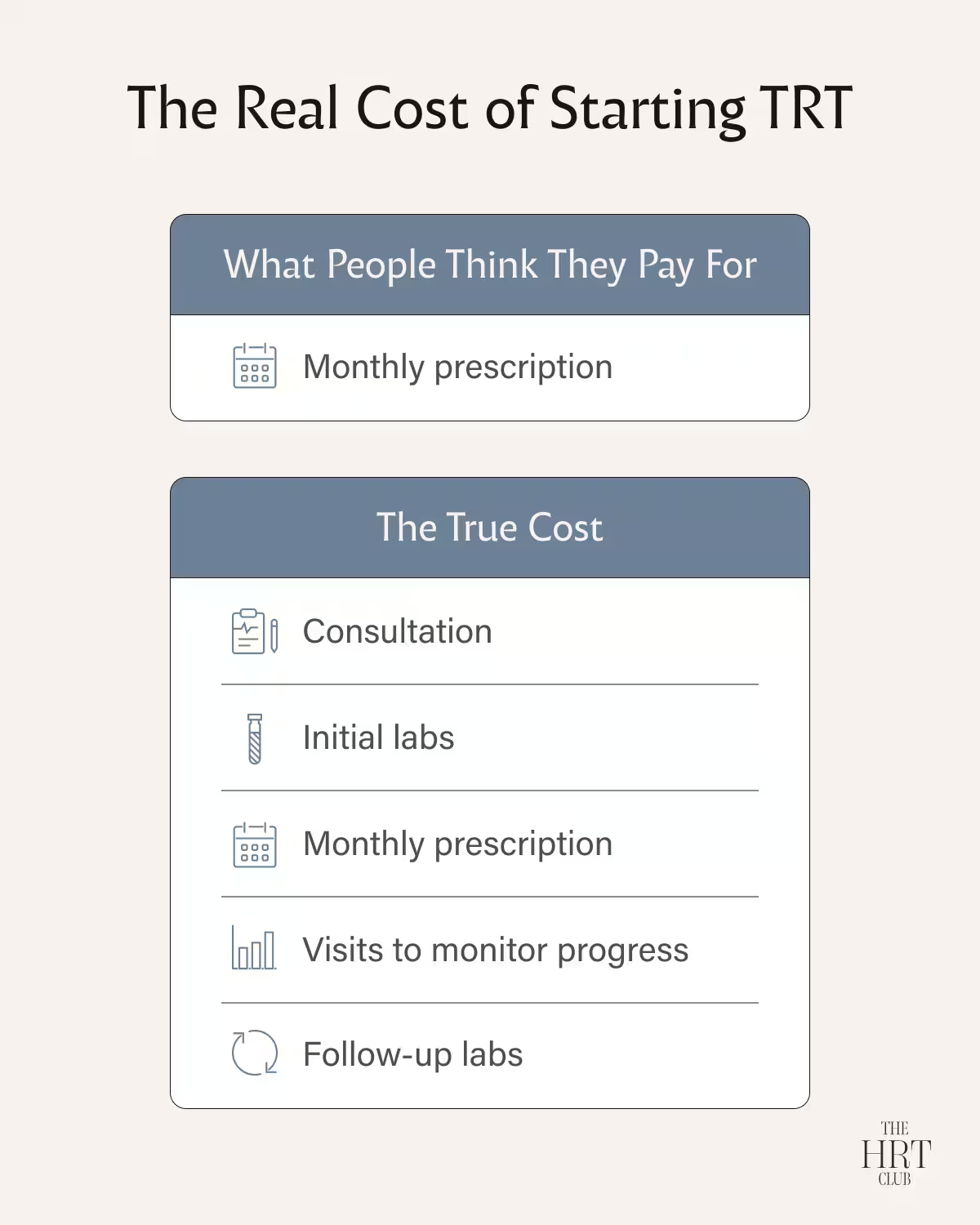
The prices we’ve discussed don’t work like all-inclusive resorts. They’re only for the monthly prescription, and other costs factor into the “how much is testosterone therapy” equation too:
- Initial provider consultation fee: TRT is a prescription drug, meaning a healthcare provider must assess overall health and decide if it’s appropriate. The cost of this appointment varies depending on provider type, insurance plan, and geographic location, says Christian.
- Hormone panel labs: “Before starting treatment, a thorough workup may include hormone testing, blood counts, metabolic labs, and PSA screening [blood test for a protein made in the prostate] when appropriate,” says Christian. Some patients may undergo additional testing to rule out other medical conditions, Christian adds. Since the ordered tests are tailored to the individual, they’re hard to predict.
- Monthly medication cost: This is what we’ve spent a good chunk of the article discussing. As a refresher, costs may range from $20 to over $500 a month.
- Ongoing monitoring: TRT requires follow-up visits with the prescribing healthcare provider to assess progress. If paying without insurance, you may be responsible for any and all appointment costs. If these are covered by insurance, you may need to factor copays or coinsurance into your budget.
- Follow-up labs: As part of their monitoring, a healthcare provider may order follow-up labs, which may drive up the total cost.
How to lower your TRT costs
Now onto the part that any other budgeters out there will love: how to save money on this medication. Here are a few ways to make TRT more affordable:
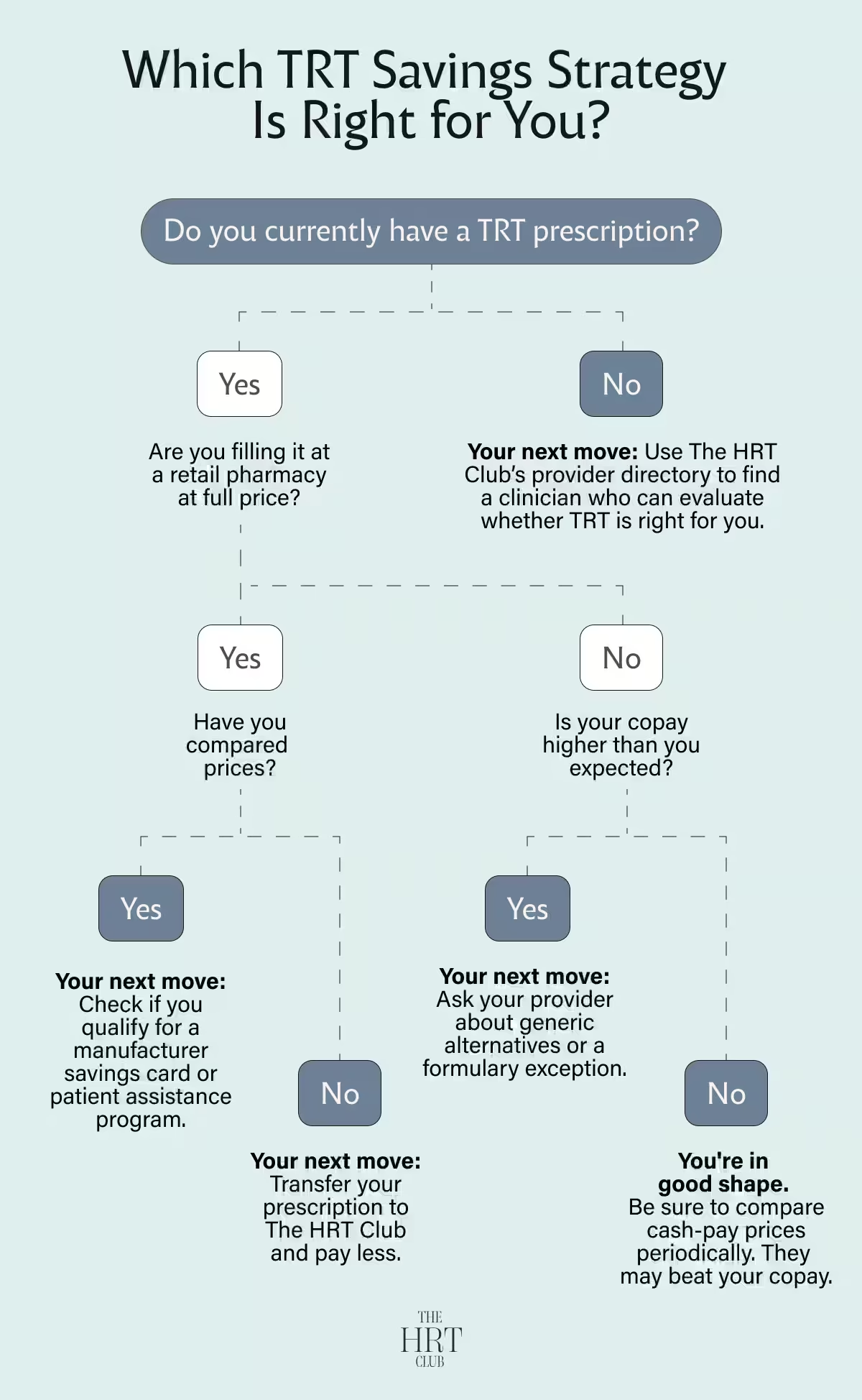
- Ask about generic formulations: Generic formulations may be more affordable than name-brand options, per the FDA. For TRT specifically, testosterone cypionate is the most widely available generic formulation.
- Compare pharmacy pricing: When repainting a room in your home, you’ll probably look at many, many paint samples first. And if you want to shop around for paint, you definitely want to explore all the options when it comes to your health. In fact, a 2024 study in the Journal of General Internal Medicine suggests that while generic drugs may be more affordable, patients who shop around often get the best price. To do so, compare multiple pharmacy or membership services before deciding.
- Understand lab requirements: Christian says that TRT often comes with labs. Make sure you transparently discuss lab costs (and any-in-network places to get lab work) with a provider beforehand.
- Work with a provider who is transparent about cost: A good healthcare provider is worth their weight in gold. One trait they should possess is a willingness to discuss affordability and help patients navigate options. However, due to insurance, pharmacy pricing, discounts, and other variables, they may not know the exact price a patient will pay. Your total costs will also be impacted by your insurance plan’s out-of-pocket maximum.
- Check prescription discount tools: Discount tools like GoodRx and SingleCare are oldies but goodies when it comes to lowering prescription drug costs. You can always ask for the cash price from your pharmacy as well.
- Transfer your prescription to a membership platform: Investing in memberships can help save money, because membership programs often offer lower prices for things you repeatedly buy. Since TRT therapy delivers the best results after consistent use month after month, it definitely falls into this bucket. Luckily, you can transfer your prescription to The HRT Club. This membership platform lets you view transparent member pricing and compare that cost against retail pharmacy or insurance pricing.
CTA callout box: Wondering what a membership platform looks like for TRT? The HRT Club offers an affordable option where members can fill their existing prescription and pay less. Explore pricing options and membership perks to learn more.
The bottom line
The cost of TRT therapy varies greatly, ranging from $20 a month to over $500. Testosterone costs shouldn’t be a barrier to getting this therapy; options exist at every price point and membership platforms, like The HRT Club, are committed to making this hormone therapy accessible. To start your TRT journey, contact a pharmacy, healthcare provider, or the HRT Club to determine what the numbers may look like for you.
FAQ
What is the cheapest form of TRT?
Injections are often the cheapest form of TRT. However, more than just the TRT form impacts cost; the clinic where you get TRT, your insurance plan, and lab requirements before starting also determine how much you pay.
Does insurance cover testosterone therapy for women?
While testosterone therapy is sometimes prescribed off-label for women, TRT is only FDA-approved for men. That means most insurance providers will not cover it for those who are not biologically male, though all insurance policies vary. Check your policy details to determine if it’s covered or not.
Is TRT worth the cost?
TRT may be worth the cost when it’s clinically indicated, appropriate for someone’s symptoms and goals, and when the benefits outweigh any potential risks. It may reduce symptoms of low testosterone, such as difficulty concentrating, decreased muscle mass, and low sperm count. For others, it’s a crucial part of gender-affirming care. For a thorough assessment, you should discuss with your medical provider.
About Author