.png)



Choosing between an estrogen patch and a pill for hormone replacement therapy (HRT) isn’t always a simple decision; it depends on several factors, ranging from your personal health history and risk factors to your lifestyle preferences and daily routines. The important thing to know is that the estrogen patch, the estrogen pill, and other forms of HRT (like estrogen gels, creams, and rings) can all potentially help relieve menopausal symptoms, but through slightly different routes. Ultimately, choosing between an estrogen patch or pill is a deeply personal decision that’s best made with the guidance of a healthcare provider who takes your individual needs, goals, and habits into account.
Key takeaways:
- Oral estrogen pills go through a process called “first-pass metabolism” that may increase the risk of blood clots, deep vein thrombosis, or stroke for some people predisposed to these issues.
- Estrogen patches bypass the liver and deliver the medication directly through the skin and into the bloodstream, meaning they don’t elevate the same risks that oral pills can.
- Beyond pills and patches, topical gels and sprays offer some of the same benefits of patches, without the potential for adhesion issues. Localized vaginal estrogens can also deliver low doses directly to vaginal tissue to treat menopause symptoms like dryness and painful sex, but they may not treat whole-body symptoms, although some vaginal ring preparations do.
If you’ve ever considered hormone replacement therapy (HRT) for menopause, perimenopause, or a number of other conditions that may have you feeling moodier, sweatier, or otherwise off, you’ve likely heard a lot about estrogen. But you’ve probably also quickly realized that one size absolutely does not fit all when it comes to what type of estrogen works best when it comes to addressing symptoms in each person. Should you pop a daily estrogen pill or try a skin patch? And what’s the deal with estrogen creams, gels, and rings?
If you’re overwhelmed and more confused than ever about how to choose the best fit for your body, read on to learn everything from why delivery method matters when it comes to estrogen, the pros and cons of pills versus patches, and how to find the right match for your lifestyle.
Why delivery method matters more than most people realize
“I always tell patients estrogen is not just estrogen,” says fertility doctor Aimee D. Eyvazzadeh, MD, MPH. “How you take it matters because the body ‘sees’ it differently depending on the route.”
While hormone replacement therapy (HRT) is often referred to as a singular type of treatment, there’s nuance and specificity that goes into finding the right treatment for each person. Estrogen therapy comes in several forms, and the delivery method you choose isn’t just based on convenience; it’s rooted in your own health history, risk profile, lifestyle preferences, and more.
To understand the key difference between estrogen patches and estrogen pills, you have to know about a process called “first-pass metabolism,” sometimes referred to as the “first-pass effect,” according to StatPearls, a peer-reviewed clinical reference tracking modern pharmacology. When you take an oral medication, the drug doesn’t immediately hit your bloodstream; instead, it’s first processed in a specific part of the body (usually the liver, but not always) so it can be broken down and filtered. In this process, some of the medication is lost, meaning a much smaller amount of the active drug moves on and enters the bloodstream. This can sometimes lead to side effects.
Different types of estrogen are used in HRT, including estradiol (a bio-idenetical hormone that is considered most potent) and estrone (a weaker form of the hormone), according to Frontiers in Endocrinology. When you take estradiol orally, the liver has to break down the hormones into something your body can absorb.
“A pill goes through the gut and then the liver first—that’s called ‘first-pass metabolism,’” Eyvazzadeh says. “The liver then changes some of that estradiol into estrone and also increases certain liver-made proteins, including clotting factors. A patch, gel, spray, or ring bypasses the gut and liver first and goes more directly into the bloodstream. So even if two people are technically ‘on estrogen’ the experience can feel different.”
While Eyvazzadeh says both patches and pills can effectively treat symptoms like hot flashes, night sweats, sleep disruption, and other menopause symptoms, one can feel very different from the other depending on the person. “Some people feel great on pills and some feel steadier on patches because the level is more consistent,” she says.
“Some people don’t absorb patches well, or they get skin irritation, or the patch falls off. Some people love gels because they can adjust the dose more gradually. This is why I never want patients to feel like they ‘failed’ hormone therapy. Sometimes the delivery method was just not the right fit.”
Estrogen patches: What they are and who they work best for
According to Cleveland Clinic, an estrogen patch is a small, clear sticker that you apply to the skin of your lower abdomen once or twice a week, depending on your protocol. Because the patch delivers estrogen directly through the skin into your bloodstream, it bypasses the liver completely, which may help prevent downstream side effects. The patch is also able to deliver a more steady, continuous release of the medication, which may provide more whole-body symptom relief.
“Transdermal estrogen bypasses that first-pass liver effect.” Eyvazzadeh says. “Because of that, I often prefer transdermal estrogen for patients who have higher clot risk, migraine with aura, elevated triglycerides, metabolic risk factors, or other reasons I want to avoid stimulating the liver.”
If you are considering an estrogen patch, however, it’s worth noting that they have been harder to obtain lately. According to data from the American Society of Health-System Pharmacists, three types of estrogen patches are currently in shortage. Sources told NPR that manufacturers have experienced a significant increase in demand for patches as the popularity of HRT has grown, and in some cases, they’ve been unable to keep up supply. That doesn’t mean the patch isn’t an option—it’s just important to know that availability can vary by dose, manufacturer, and pharmacy. Be sure to talk to your prescriber and if you’re unsure about the availability of a certain type of patch, call your local pharmacies.
Advantages of estrogen patches
- Steadier hormone levels: Unlike oral medications that come in the form of a single daily dose that peaks and wanes, transdermal patches deliver a continuous low dose of estrogen over time. For some, this consistent delivery helps eliminate the ups and downs of hormonal symptoms like hot flashes and mood swings that pills sometimes can’t treat, according to Hormone Molecular Biology and Clinical Investigation.
- Lower blood clot and stroke risk: Because transdermal estrogen goes directly to the bloodstream, it bypasses the digestive system and liver, which has less effect on liver-produced clotting factors. For people already at high risk for health risks such as blood clots, a transdermal patch can be significantly safer.
- Better for existing mental health concerns: Because fluctuating hormone levels can contribute to mental health conditions like depression and anxiety, the patch’s steady release of estrogen can help prevent major mental ups and downs. “Some patients feel more emotionally steady on transdermal estrogen because the levels may be smoother,” Eyvazzadeh says.
- Better for liver concerns: As previously mentioned, the estrogen patch completely bypasses the liver, so anyone prone to existing liver issues or health concerns may opt for the patch over the pill.
- Less production of sex hormone-binding globulin: This can elevate with oral HRT and can contribute to a decrease in libido by binding to testosterone. So people who are concerned with loss of libido may opt for the patch.
- Less frequent application: While oral pills must be taken once a day, transdermal patches are typically removed and re-applied once or twice a week, which can be less of a mental burden for users, according to the Food and Drug Administration (FDA).
Side effects of estrogen patches
- Skin reactions: Some people may experience redness, itching, or slight irritation directly under or around the patch, but these reactions tend to be minor. If the patch does cause an allergic reaction or the irritation doesn’t resolve on its own, it’s important to contact a medical doctor right away.
- Breast tenderness: Slight soreness or swelling of the breasts is common when starting any form of estrogen therapy, but usually resolves after up to a couple months of use, according to Cleveland Clinic.
- Headaches: Starting estrogen therapy can sometimes trigger headaches, but these are usually temporary and resolve within the first few weeks of use.
- Nausea: While nausea is less common for those who use estrogen patches over pills, it can still happen in some cases, according to Mayo Clinic.
- Mood changes: While transdermal patches are typically better for those prone to mood fluctuations, some users do report mood changes, particularly around the one or two days a week when the patch is changed.
Practical and clinical limitations
- Patches can fall off: While patches are designed to stay stuck to the skin, they can sometimes lift at the edges or fall off entirely, which may interrupt the continuous dose of hormones they’re intended to provide.
- Inconsistent absorption: The rate at which estradiol is absorbed into the skin can vary significantly based on a variety of factors, like the exact application site, a person’s skin hydration, body temperature, subcutaneous fat distribution, and more, according to the Journal of Clinical Medicine. Because of these individual differences, two people using the same type of estrogen patch may have very different circulating estradiol levels.
- Fewer dose options: Unlike oral forms of estrogen that can be split or dose adjusted, transdermal patches are only manufactured in a few fixed, pre-set increments (usually 0.025, 0.0375, 0.05, 0.075, and 0.1 mg/day), according to Mayo Clinic. This can make it more challenging for healthcare providers to make minor, customized adjustments if necessary.
- Lifestyle friction: For anyone who regularly swims, tans, exercises, or uses body oil and lotion, estrogen patches may be more difficult to keep in place. Because they adhere to the skin, there’s also potential for them to be visible under certain types of clothing, which may be an issue for some.
- Moderate cost: While there are generic formulations available, transdermal estrogen patches tend to be more expensive than oral estrogen at equivalent doses, and individual insurance coverage varies, according to the journal Women's Health.
Who patches work best for
- Those with a history of blood clots, elevated cardiovascular risk, or hypertension
- Those with hormone-related migraines or severe headaches triggered by estrogen drops
- Those with preexisting liver or gallbladder issues
- Those managing mental health conditions like existing depression and anxiety and/or are vulnerable to hormonal shifts
- Those who prefer the convenience of weekly or twice-weekly application over a daily oral pill routine
- Those who do not have highly sensitive skin, adhesive allergies, or highly active lifestyles that may interfere with adhesion
- Those whose menopausal symptoms fluctuate severely throughout the day and require steady, continuous hormone levels
Estrogen pills: What they are and who they work best for
Oral estrogen comes in the form of a daily pill available in a wide variety of customizable doses. Unlike patches, oral pills have to be swallowed, moved through the digestive tract, and processed by the liver before entering the bloodstream. This aforementioned first-pass metabolism converts a major portion of the strong estradiol into weaker estrone and triggers the liver to produce extra blood-clotting factors.
“Oral estrogen goes through the liver first,” Eyvazzadeh says. “That can increase clotting factors, triglycerides, inflammatory markers, and binding proteins. It also tends to create a higher estrone-to-estradiol ratio because estradiol is converted in the gut and liver.”
Advantages of estrogen pills
- Most dosing flexibility: Oral estrogen comes in a wider range of doses than patches, making it easier to adjust and fine tune incrementally. This feature can be especially useful if you’re having a hard time finding your optimal dose or if you need adjustments over time.
- No skin contact or adhesive issues: If you have particularly sensitive skin or are prone to allergies, adhesive reactions, or other dermatological conditions, oral medication may make the most sense.
- Familiar and low-friction format: If you already have an existing daily medication routine, an estrogen pill may be an easy, familiar way to integrate the medication into your life. There’s also no application technique, drying time, or placement considerations required.
- Often lowest cost: Because oral estrogen formulations have been mass-produced as generics for decades, the retail manufacturing costs are generally much lower than those related to patches. When it comes to long-term treatment sustainability, affordability may be a big factor to consider.
- Less lifestyle interference: An oral pill means you don’t have to worry about how certain activities or skin products may interfere with the medication’s effectiveness.
Side effects of estrogen pills
- Nausea: An upset stomach is more common with oral estrogen compared to the patch because the medication has to move through the digestive tract, according to StatPearls. For some people, taking medication with food can help mitigate digestive issues.
- Breast tenderness: As with all forms of estrogen, breast soreness and swelling may occur, especially when starting or adjusting a dose, but typically improves over time.
- Headaches: Some people (particularly those prone to severe headaches and/or migraines with aura) may experience headaches, especially right before the time of their daily dose, when circulating estrogen has dropped off.
- Bloating or digestive discomfort: Because estrogen pills have to go through the stomach and intestines, side effects like bloating and digestive discomfort may be more common than with the patch.
- Mood fluctuations: Some people may notice the “peaks” and “troughs” of oral medication because the drug is not consistently and steadily delivered to the body as it is with a patch. For some, the hills and valleys of dosing can affect mood and energy.
Practical and clinical limitations
- Higher blood clot and stroke risk than transdermal: As discussed, oral estrogen does carry a higher risk of blood clot and stroke than the transdermal patch because of first-pass liver metabolism, according to the Journal of Clinical Endocrinology & Metabolism. However, it’s important to know that these risks are most clinically relevant for people with additional cardiovascular risk factors and that the absolute risk (i.e. the chance of these issues happening within a specific population over a given period of time) is low for healthy people. That said, the difference between oral and transdermal risks is real and worth discussing with a provider.
“Blood clot risk is one of the key clinical distinctions,” Eyvazzadeh says. “Oral estrogen is associated with a higher risk of venous thromboembolism. Transdermal estrogen appears to have less effect on clotting risk, though we still individualize and look at the whole patient.”
- Converts estradiol to estrone: First-pass metabolism means that with oral pills, there is more (weak) estrone circulating in the blood and less (strong) estradiol, according to Frontiers in Endocrinology. This means you would typically need a significantly higher oral dose to achieve the same circulating tissue levels that a patch can provide.
- Hormone level fluctuations: Taking a single daily pill creates peaks and troughs of circulating estrogen; hormone levels spike in the hours after ingestion, and drop off as the day goes on. This may be imperceptible to some people, but others who are highly sensitive to hormonal shifts may notice symptoms like hot flashes or anxiety return in the hours before their next scheduled dose.
- Not recommended for people with liver disease or certain clotting disorders: Because estrogen pills put stress on the liver, doctors typically advise anyone with existing liver disease or gallbladder issues to avoid oral estrogen.
- Daily commitment: Missing a single dose of a daily pill regimen can cause symptoms to fluctuate more noticeably than with a patch. To avoid the possible symptom flare ups associated with major peaks and troughs, oral estrogen requires a higher level of consistency.
Who estrogen pills work best for
- Healthy individuals without significant cardiovascular risk factors, clotting history, or liver concerns
- Those needing flexibility with dosing or those still finding their optimal dose
- Those with sensitive skin, adhesive reactions, or active lifestyles that make patch adhesion difficult
- Those seeking lower cost options
- Those who prefer the simplicity of a daily oral medication and find patch or gel application inconvenient
- Those with an existing daily pill routine who want the lowest-friction addition
Other estrogen delivery options worth knowing about
In addition to pills and patches, there are several other forms of estrogen worth knowing about if you’re considering HRT, like gels, sprays, vaginal creams, rings, and inserts. Each serves a different clinical need and may work for individuals who can’t find the right fit with patches or pills.
While there are compounded versions of certain estrogen delivery options (meaning they’re custom-made and mixed in a special pharmacy), Eyvazzadeh says she generally prefers to prescribe FDA-approved products when possible because dosing and safety data are more reliable.
Estrogen gels and sprays
- What it is: Transdermal estrogen is applied directly to the skin daily and uses the same mechanism as a patch (bypasses liver, delivers estradiol directly to bloodstream) but without adhesive.
- Best for: Those with adhesive sensitivity or skin reactions to patches who still want transdermal delivery; those who prefer daily control over a fixed patch dose; those with active lifestyles where patch adhesion is a problem. “For systemic menopause symptoms like hot flashes and night sweats, patches, pills, gels, sprays, and some rings can be used,” Eyvazzadeh says.
- Key limitations: Gels and sprays have to be applied daily and allowed to dry before skin contact with clothing or another person. The application site consistency matters for even absorption, and the cost is considered moderate in comparison to other forms of estrogen.
Vaginal estrogen (creams, rings, suppositories)
- What it is: Local estrogen applied directly to vaginal tissue; minimal systemic absorption, targets genitourinary symptoms specifically rather than whole-body symptoms. “There is also the option of an estrogen ring that gives systemic levels, and there are lower-dose vaginal rings that mainly treat local symptoms,” Eyvazzadeh says. “So the ‘ring’ category depends on which ring we are talking about.”
- Best for: Those with primary symptoms of vaginal dryness, painful sex, or urinary urgency and frequency; those who don't need or want systemic HRT; those who want to add local treatment alongside systemic HRT for persistent genitourinary symptoms. “For vaginal dryness, painful sex, recurrent UTIs, or urinary symptoms, local vaginal estrogen can be amazing and is typically very low dose,” Eyvazzadeh says. “Sometimes a patient needs both: systemic estrogen for whole-body symptoms and local estrogen for vaginal and urinary symptoms.” Even patients with a complicated medical history can potentially trial local vaginal estrogen — make sure to have a conversation with your healthcare provider.
- Key limitations: Creams, rings, and suppositories generally do not treat vasomotor symptoms like hot flashes, night sweats, or other systemic effects of estrogen decline. Creams require more frequent application than rings (which have to be replaced every three months), and some people find creams messy or inconvenient.
Which estrogen delivery method is right for you?
By now, you’ve probably realized that choosing the right estrogen delivery method is anything but a one-size-fits-all decision. The “right” estrogen for you depends on a variety of factors ranging from your health history and lifestyle considerations to personal preferences and more.
“I look at the patient, not just the prescription,” Eyvazzadeh says, noting the list of questions she typically runs through when considering which estrogen delivery method is best for a particular person:
- What are her symptoms?
- Is she having hot flashes, poor sleep, joint pain, mood changes, vaginal dryness, low libido, migraines, heavy bleeding, or brain fog?
- Does she still have a uterus?
- What is her clot risk?
- Does she smoke?
- What is her BMI?
- Any history of blood clots, stroke, breast cancer, liver disease, gallbladder disease, high triglycerides, endometriosis, fibroids, or migraines?
Once she’s run through that initial list of questions, Eyvazzadeh moves on to the more practical ones:
- Will she remember a daily pill?
- Does she want something twice weekly?
- Does she have sensitive skin?
- Does she travel a lot?
- Does she swim?
- Does she hate sticky things?
- Does she want something discreet?
This lengthy list of questions isn’t just about personalization and safety; it’s about creating a plan that a patient can and will realistically stick to. “These things matter because the best hormone plan is the one someone can actually use,” she says.
If you’re wondering which estrogen delivery method is right for you, consider the following:
Do you have health considerations that may affect your options — blood clots, migraines, liver concerns, or skin sensitivity?
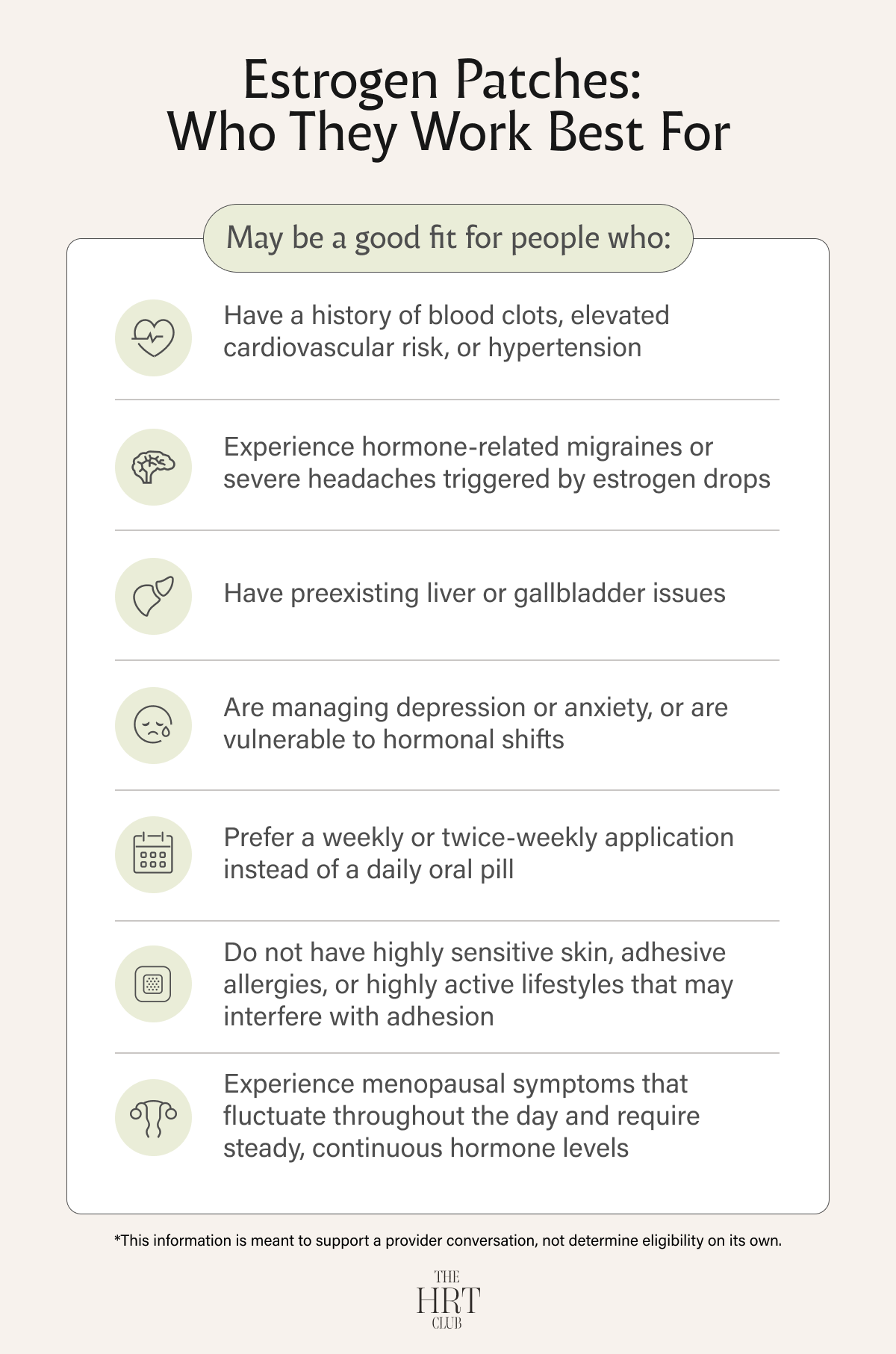
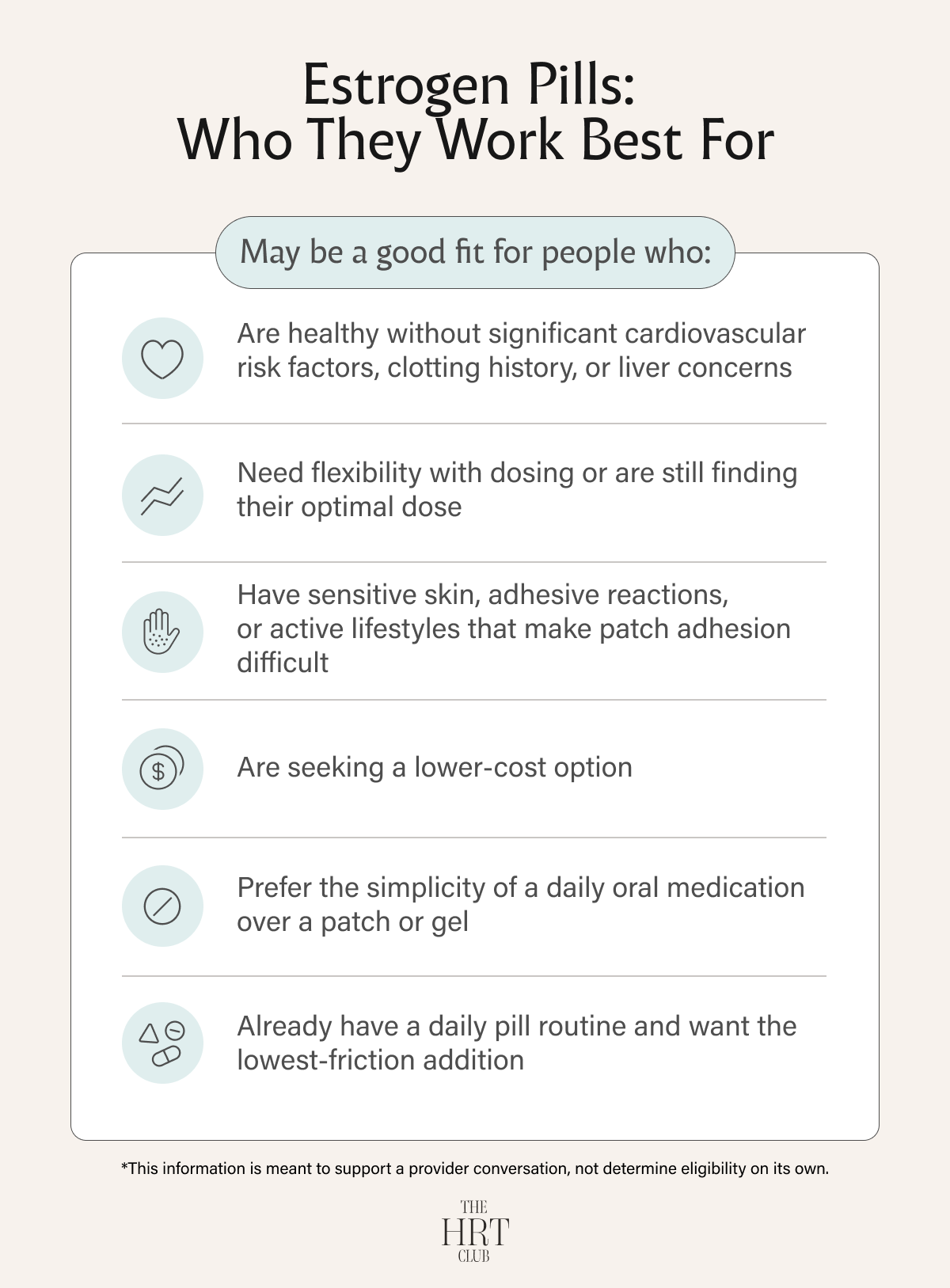
The table below details how various medical profiles align with each estrogen option:
Are you deciding based on lifestyle, cost, or practicality?
Important note: The tables above are intended as decision-support guides, not medical advice. Always consult a licensed healthcare provider to thoroughly review your complete medical history, evaluate your symptoms, and safely determine the delivery method and dosage that is right for you.
What to do if your current form of estrogen isn't working
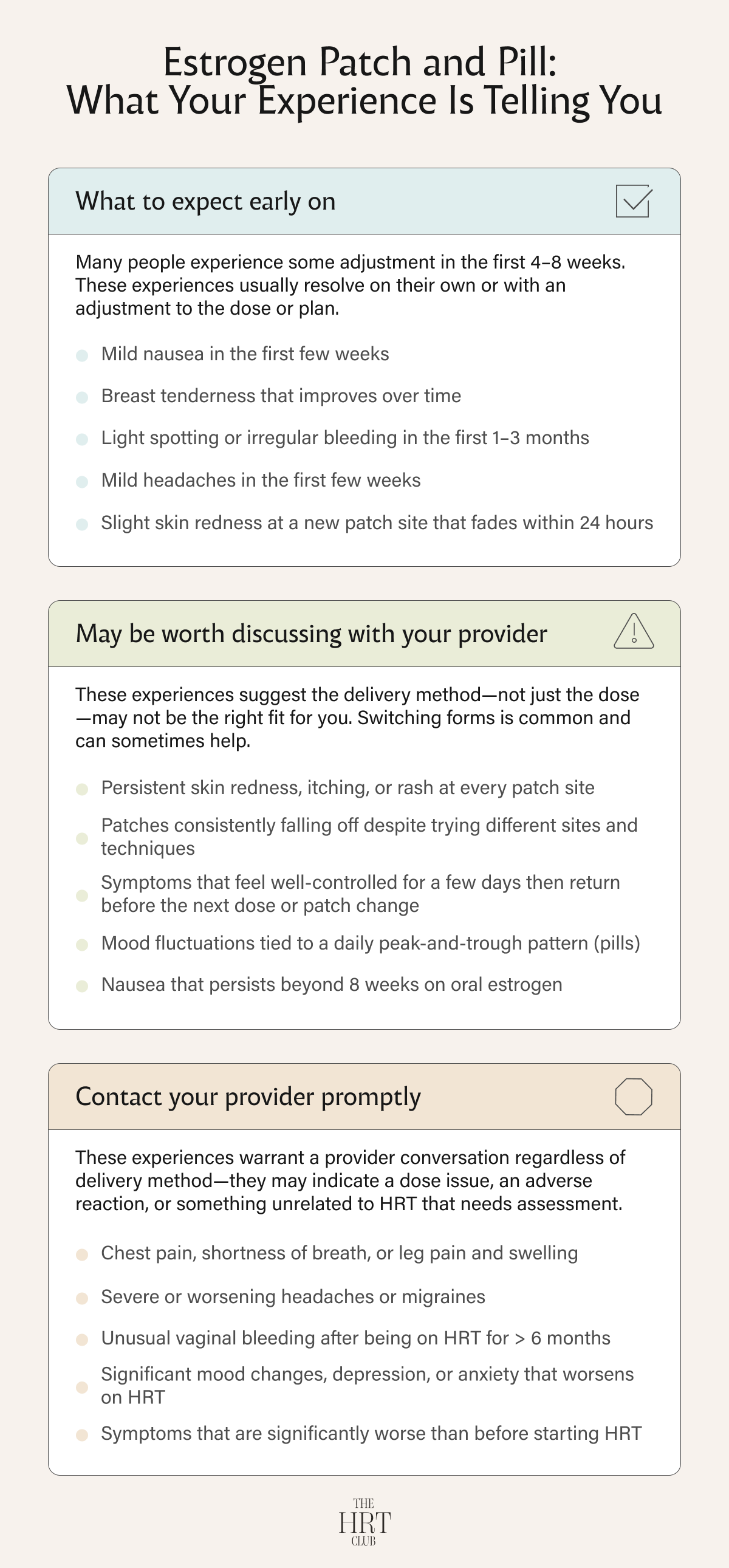
If you’re already on HRT but still feeling off, you might be wondering if it’s time to reevaluate your current estrogen delivery method. The good news (as you’ve probably discovered over the course of this article) there are plenty of options and you can absolutely explore other methods with expert guidance. Issues with estrogen replacement don't necessarily mean HRT isn't right for you—in fact, switching delivery methods isn’t just common and legitimate; it can often resolve the issues you’re having.
The most important thing is to be honest and as detailed as possible with your healthcare provider. “Come in with specifics,” Eyvazzadeh says. “Don’t just say, ‘I don’t feel good.’ Say ‘my hot flashes are better but my sleep is still terrible,’ or ‘I feel moody the day before I change my patch,’ or ‘my patch is falling off,’ or ‘my breast tenderness started after the dose increase.’”
A few signs your estrogen delivery method may not be working for you:
- Persistent side effects like nausea, headaches, or breast tenderness that won’t go away
- Adhesive or skin reactions
- Inadequate symptom management
- Inconsistent absorption
- Mood or energy issues
In addition to expressing your symptoms as clearly as possible, Eyvazzadeh says it’s also important to come to your visit prepared with a specific list of questions, including:
- Am I on the right dose?
- Would a different route make sense for my risks?
- Do I need progesterone because I still have a uterus?
- Could my symptoms be from too much estrogen, too little estrogen, or fluctuating levels?
- How long should I try this before adjusting?
- What side effects should make me call you?
And if the estrogen delivery method you initially opted for just isn’t meeting your needs or is actually making you feel worse, there’s absolutely no reason to feel guilty or ashamed. “Please know: switching delivery methods is normal,” Eyvazzadeh says. “It’s not a failure; it’s fine-tuning.”
The bottom line
If you’re deciding between an estrogen patch, pill, or other delivery method, you have a lot of options to consider. And while that may sound overwhelming at first, it’s a great thing to know you can work with a healthcare provider to find the best, individualized plan that works specifically for you. The decision you come to is really rooted in your personal medical history, baseline risk factors, daily lifestyle, and more. While oral tablets can be the most affordable and flexible, transdermal options like patches and gels provide a steadier hormonal release and bypass the liver, which may make them a better option if you’re navigating cardiovascular, clotting, or liver concerns. It is, however, important to remember that there is a current shortage of several types of estrogen patches, so always discuss your options with your prescriber and seek out a pharmacy or supplier that has your prescription in stock.
“Menopause care should be personalized,” Eyvazzadeh says. “I don’t prescribe hormones based only on age or lab values. I prescribe based on symptoms, risk factors, goals, and how someone actually feels. The goal is not just to stop hot flashes. The goal is to help someone sleep, think clearly, feel emotionally steady, protect bones, support sexual health, and feel like herself again. Hormone therapy is not one product. It’s a conversation.”
FAQ
Do estrogen patches cause weight gain?
In short, no. According to long-term randomized controlled clinical trials in the Journal of Clinical Endocrinology and Metabolism that tracked postmenopausal women using transdermal estradiol patches, there is no clinically significant weight gain or increase in body fat compared to a placebo. Some people do notice a bit of weight gain when they start using estrogen patches, but that is most likely due to temporary fluid retention and bloating, according to the journal Menopause and Cleveland Clinic.
What is the difference between an estrogen patch and an estrogen gel?
Both estrogen patches and estrogen gels are transdermal delivery methods—meaning they deliver estradiol straight through the skin and into the bloodstream, avoiding first-pass liver metabolism. But patches and gels have their own distinct uses and applications. Estrogen patches are small, clear stickers applied to the lower abdomen once or twice a week while gels are clear, topical liquids that are rubbed onto the arms, legs, or shoulders once a day. While patches offer a more steady delivery of estrogen, gels have a mild daily spike shortly after application that gradually tapers off before the next daily dose. While the logistics are a bit different, both patches and gels avoid liver processing, so they don’t stimulate clotting factors or elevate blood clot risks like oral pills can.
Can I switch from an estrogen pill to a patch?
Switching from a pill to a patch is possible, but it’s always advised to follow the advice and guidance of a medical professional. Generally speaking, people often decide to switch from the pill to a patch for a few reasons: 1) The patch bypasses the liver, lowering the risk of blood clots, deep vein thrombosis (DVT), and stroke; 2) The patch offers a steadier stream of hormones, versus the pill which has a daily peak and trough, which may exacerbate certain symptoms; and 3) Because the patch avoids processing in the GI tract, it may be preferable to people prone to bloating, nausea, or stomach upset.
About Author